Charts
Pickleball Round Robin Charts for 4 to 16 Players (Printable Rotation Schedules)
Ready-to-print pickleball round robin rotation charts for 4, 5, 6, 7, 8, 9, 10, 11, 12, 13, 14, 15 and 16 players on 1 to 4 courts. Every chart gives everyone the same number of games, rotates sit-outs fairly and keeps partner repeats to the minimum — with the exact fairness stats for each one.
Updated 9 min readBy the PicklePal team
On this page
- How to use a chart
- Which chart do I need?
- 4-player round robin chart
- 5-player round robin chart
- 6-player round robin chart
- 7-player round robin chart
- 8-player round robin chart
- 9-player round robin chart
- 10-player round robin chart
- 11-player round robin chart
- 12-player round robin chart
- 13-player round robin chart
- 14-player round robin chart
- 15-player round robin chart
- 16-player round robin chart
- Scoring and time
- Frequently asked questions
These are the charts we print and pin to the fence. They cover every player count from 4 to 16 on the natural number of courts (one court per four players), and for 4, 5, 8, 9, 12, 13 and 16 players they are provably the best rotations that exist. The rest are the fairest schedules our search could find — not the first ones that happened to work.
Each chart lists, for every round, who plays on each court and who sits out. Players are numbers; you write the names on the key. Scores go next to the row. At the end, count wins and point differential and you have a standing.
How to use a chart
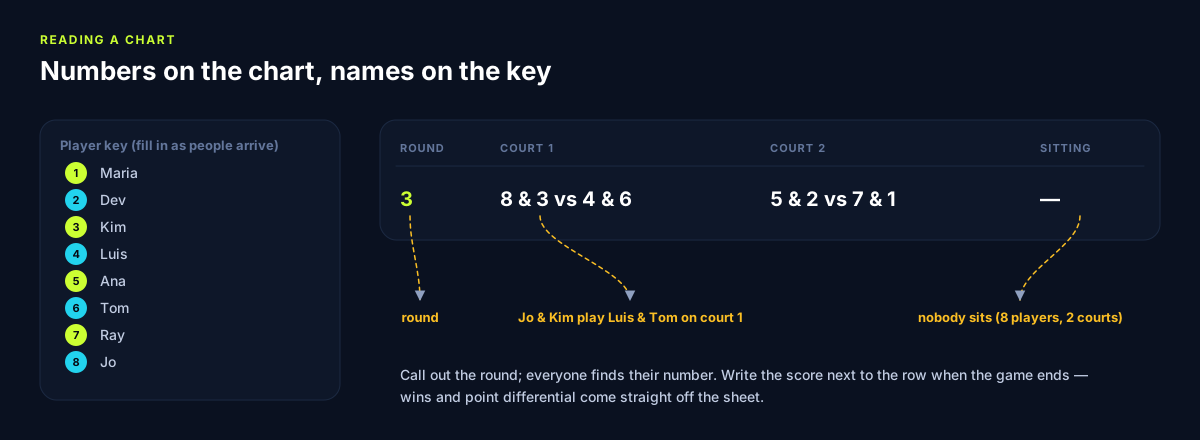
- Number the players in the order they arrive, and write the names on a key.
- Find the chart for your player count. If you have more courts than the chart, use the chart's court count anyway; if you have fewer, see below.
- Call the round. "Round 1!" Everyone finds their number and goes to their court. The sitting players keep score, run the timer or warm up.
- Record the score next to the row. Circle the winners if you are ranking by wins.
- Stop when time is up. Each chart notes the rounds at which everyone has played the same number of games.
Fewer courts than the chart
Every chart assumes one court per four players. If you have fewer courts — 8 players on one court, 12 on two — play each round's courts one at a time: round 1 court 1, then round 1 court 2, then round 2 court 1, and so on. The rotation stays exactly as fair; it just takes longer, and players sit out between their games. Time-wise, 8 players on one court is 14 games instead of 7 rounds.
More than 16 players
Split into two groups and run two charts side by side — two groups of 8 on four courts, for example. Seed the groups by level if you can (close games) or shuffle them (more mixing). For a single field of 17 to 40 players, a generator does the job better than a printed chart because it can redraw the rotation when people arrive late or leave early.
What "fair" means here
Every chart below was generated by a search that optimises the same four things, in this order:
- Equal games. Everyone plays the same number of games at the end of the chart.
- Spread-out sit-outs. Nobody sits twice in a row, and sit-outs are spaced as evenly as possible.
- No repeat partners until every pair has partnered once. Where the numbers force repeats (6 players on one court), the chart repeats as few as mathematically possible.
- Spread-out opponents. You face as many different people as possible, and nobody three times when twice would do.
The perfect charts come from a branch of combinatorics called whist tournament designs, which exist only when the player count is a multiple of 4 or one more than a multiple of 4. That is why 8, 12 and 16 have perfect charts and 6, 10 and 14 do not — not a limitation of the search, just arithmetic. Every chart was re-verified by an independent check after generation.
Which chart do I need?
| Players | Courts | Rounds | Games each | Sit-outs each | Partner repeats | Perfect rotation? |
|---|---|---|---|---|---|---|
| 4 | 1 | 3 | 3 | 0 | 0 | Yes |
| 5 | 1 | 5 | 4 | 1 | 0 | Yes |
| 6 | 1 | 9 | 6 | 3 | 3 | Balanced |
| 7 | 1 | 7 | 4 | 3 | 0 | Balanced |
| 8 | 2 | 7 | 7 | 0 | 0 | Yes |
| 9 | 2 | 9 | 8 | 1 | 0 | Yes |
| 10 | 2 | 10 | 8 | 2 | 0 | Balanced |
| 11 | 2 | 11 | 8 | 3 | 0 | Balanced |
| 12 | 3 | 11 | 11 | 0 | 0 | Yes |
| 13 | 3 | 13 | 12 | 1 | 0 | Yes |
| 14 | 3 | 7 | 6 | 1 | 0 | Balanced |
| 15 | 3 | 10 | 8 | 2 | 0 | Balanced |
| 16 | 4 | 15 | 15 | 0 | 0 | Yes |
4-player round robin chart
1 court, 3 rounds. Everyone plays 3 games. Perfect rotation: every player partners every other player exactly once and plays against everyone exactly twice.
Nobody sits, so you can stop after any round and games stay equal.
| Round | Court 1 |
|---|---|
| 1 | 1 & 2 vs 3 & 4 |
| 2 | 1 & 3 vs 2 & 4 |
| 3 | 1 & 4 vs 2 & 3 |
5-player round robin chart
1 court, 5 rounds. Everyone plays 4 games and sits out 1. Perfect rotation: every player partners every other player exactly once and plays against everyone exactly twice. Nobody sits out twice in a row.
Games only come out equal after all 5 rounds; if you must stop early, rank by win percentage.
| Round | Court 1 | Sitting out |
|---|---|---|
| 1 | 2 & 5 vs 3 & 4 | 1 |
| 2 | 3 & 1 vs 4 & 5 | 2 |
| 3 | 4 & 2 vs 5 & 1 | 3 |
| 4 | 5 & 3 vs 1 & 2 | 4 |
| 5 | 1 & 4 vs 2 & 3 | 5 |
6-player round robin chart
1 court, 9 rounds. Everyone plays 6 games and sits out 3. Everyone partners everyone; 3 partnerships repeat, the minimum the math allows. Each player faces 5 of the other 5 players, never more than 3 times. Nobody sits out twice in a row.
Games are equal for everyone after rounds 3, 6 and 9, so those are the rounds to stop at if you are short on time.
| Round | Court 1 | Sitting out |
|---|---|---|
| 1 | 4 & 5 vs 3 & 6 | 1, 2 |
| 2 | 6 & 2 vs 5 & 1 | 3, 4 |
| 3 | 1 & 4 vs 3 & 2 | 5, 6 |
| 4 | 6 & 4 vs 2 & 5 | 1, 3 |
| 5 | 4 & 3 vs 6 & 1 | 2, 5 |
| 6 | 5 & 3 vs 1 & 2 | 4, 6 |
| 7 | 4 & 2 vs 6 & 3 | 1, 5 |
| 8 | 1 & 3 vs 5 & 6 | 2, 4 |
| 9 | 2 & 1 vs 5 & 4 | 3, 6 |
7-player round robin chart
1 court, 7 rounds. Everyone plays 4 games and sits out 3. No repeat partners (4 of 6 possible partners each). Each player faces 5–6 of the other 6 players, never more than 2 times. Nobody sits out twice in a row.
Games only come out equal after all 7 rounds; if you must stop early, rank by win percentage.
| Round | Court 1 | Sitting out |
|---|---|---|
| 1 | 4 & 5 vs 7 & 6 | 1, 2, 3 |
| 2 | 7 & 3 vs 1 & 2 | 4, 5, 6 |
| 3 | 4 & 3 vs 6 & 5 | 1, 2, 7 |
| 4 | 1 & 7 vs 2 & 6 | 3, 4, 5 |
| 5 | 4 & 2 vs 5 & 3 | 1, 6, 7 |
| 6 | 6 & 1 vs 7 & 5 | 2, 3, 4 |
| 7 | 1 & 4 vs 2 & 3 | 5, 6, 7 |
8-player round robin chart
2 courts, 7 rounds. Everyone plays 7 games. Perfect rotation: every player partners every other player exactly once and plays against everyone exactly twice.
Nobody sits, so you can stop after any round and games stay equal.
| Round | Court 1 | Court 2 |
|---|---|---|
| 1 | 8 & 1 vs 2 & 4 | 3 & 7 vs 5 & 6 |
| 2 | 8 & 2 vs 3 & 5 | 4 & 1 vs 6 & 7 |
| 3 | 8 & 3 vs 4 & 6 | 5 & 2 vs 7 & 1 |
| 4 | 8 & 4 vs 5 & 7 | 6 & 3 vs 1 & 2 |
| 5 | 8 & 5 vs 6 & 1 | 7 & 4 vs 2 & 3 |
| 6 | 8 & 6 vs 7 & 2 | 1 & 5 vs 3 & 4 |
| 7 | 8 & 7 vs 1 & 3 | 2 & 6 vs 4 & 5 |
9-player round robin chart
2 courts, 9 rounds. Everyone plays 8 games and sits out 1. Perfect rotation: every player partners every other player exactly once and plays against everyone exactly twice. Nobody sits out twice in a row.
Games only come out equal after all 9 rounds; if you must stop early, rank by win percentage.
| Round | Court 1 | Court 2 | Sitting out |
|---|---|---|---|
| 1 | 2 & 3 vs 4 & 7 | 5 & 9 vs 6 & 8 | 1 |
| 2 | 3 & 1 vs 5 & 8 | 6 & 7 vs 4 & 9 | 2 |
| 3 | 1 & 2 vs 6 & 9 | 4 & 8 vs 5 & 7 | 3 |
| 4 | 5 & 6 vs 7 & 1 | 8 & 3 vs 9 & 2 | 4 |
| 5 | 6 & 4 vs 8 & 2 | 9 & 1 vs 7 & 3 | 5 |
| 6 | 4 & 5 vs 9 & 3 | 7 & 2 vs 8 & 1 | 6 |
| 7 | 8 & 9 vs 1 & 4 | 2 & 6 vs 3 & 5 | 7 |
| 8 | 9 & 7 vs 2 & 5 | 3 & 4 vs 1 & 6 | 8 |
| 9 | 7 & 8 vs 3 & 6 | 1 & 5 vs 2 & 4 | 9 |
10-player round robin chart
2 courts, 10 rounds. Everyone plays 8 games and sits out 2. No repeat partners (8 of 9 possible partners each). Each player faces 9 of the other 9 players, never more than 3 times. Nobody sits out twice in a row.
Games are equal for everyone after rounds 5 and 10, so those are the rounds to stop at if you are short on time.
| Round | Court 1 | Court 2 | Sitting out |
|---|---|---|---|
| 1 | 3 & 9 vs 4 & 5 | 6 & 10 vs 7 & 8 | 1, 2 |
| 2 | 9 & 7 vs 8 & 2 | 10 & 5 vs 1 & 6 | 3, 4 |
| 3 | 3 & 7 vs 8 & 1 | 9 & 4 vs 10 & 2 | 5, 6 |
| 4 | 1 & 9 vs 4 & 10 | 5 & 3 vs 6 & 2 | 7, 8 |
| 5 | 8 & 5 vs 4 & 1 | 6 & 7 vs 2 & 3 | 9, 10 |
| 6 | 7 & 5 vs 8 & 4 | 3 & 6 vs 10 & 9 | 1, 2 |
| 7 | 1 & 7 vs 6 & 9 | 2 & 5 vs 8 & 10 | 3, 4 |
| 8 | 4 & 3 vs 7 & 2 | 9 & 8 vs 10 & 1 | 5, 6 |
| 9 | 4 & 6 vs 3 & 10 | 1 & 5 vs 2 & 9 | 7, 8 |
| 10 | 2 & 1 vs 8 & 3 | 6 & 5 vs 4 & 7 | 9, 10 |
11-player round robin chart
2 courts, 11 rounds. Everyone plays 8 games and sits out 3. No repeat partners (8 of 10 possible partners each). Each player faces 10 of the other 10 players, never more than 3 times. Nobody sits out twice in a row.
Games only come out equal after all 11 rounds; if you must stop early, rank by win percentage.
| Round | Court 1 | Court 2 | Sitting out |
|---|---|---|---|
| 1 | 10 & 7 vs 11 & 5 | 8 & 4 vs 9 & 6 | 1, 2, 3 |
| 2 | 2 & 11 vs 9 & 10 | 8 & 1 vs 7 & 3 | 4, 5, 6 |
| 3 | 4 & 11 vs 3 & 5 | 10 & 6 vs 2 & 1 | 7, 8, 9 |
| 4 | 8 & 2 vs 7 & 5 | 4 & 9 vs 6 & 3 | 1, 10, 11 |
| 5 | 8 & 5 vs 6 & 11 | 1 & 10 vs 9 & 7 | 2, 3, 4 |
| 6 | 3 & 4 vs 10 & 2 | 1 & 11 vs 9 & 8 | 5, 6, 7 |
| 7 | 5 & 1 vs 3 & 2 | 7 & 11 vs 4 & 6 | 8, 9, 10 |
| 8 | 9 & 3 vs 6 & 5 | 8 & 7 vs 4 & 10 | 1, 2, 11 |
| 9 | 9 & 11 vs 7 & 1 | 2 & 6 vs 8 & 10 | 3, 4, 5 |
| 10 | 3 & 11 vs 9 & 2 | 1 & 4 vs 5 & 10 | 6, 7, 8 |
| 11 | 6 & 1 vs 4 & 5 | 2 & 7 vs 8 & 3 | 9, 10, 11 |
12-player round robin chart
3 courts, 11 rounds. Everyone plays 11 games. Perfect rotation: every player partners every other player exactly once and plays against everyone exactly twice.
Nobody sits, so you can stop after any round and games stay equal.
| Round | Court 1 | Court 2 | Court 3 |
|---|---|---|---|
| 1 | 12 & 1 vs 2 & 4 | 3 & 10 vs 7 & 8 | 5 & 11 vs 6 & 9 |
| 2 | 12 & 2 vs 3 & 5 | 4 & 11 vs 8 & 9 | 6 & 1 vs 7 & 10 |
| 3 | 12 & 3 vs 4 & 6 | 5 & 1 vs 9 & 10 | 7 & 2 vs 8 & 11 |
| 4 | 12 & 4 vs 5 & 7 | 6 & 2 vs 10 & 11 | 8 & 3 vs 9 & 1 |
| 5 | 12 & 5 vs 6 & 8 | 7 & 3 vs 11 & 1 | 9 & 4 vs 10 & 2 |
| 6 | 12 & 6 vs 7 & 9 | 8 & 4 vs 1 & 2 | 10 & 5 vs 11 & 3 |
| 7 | 12 & 7 vs 8 & 10 | 9 & 5 vs 2 & 3 | 11 & 6 vs 1 & 4 |
| 8 | 12 & 8 vs 9 & 11 | 10 & 6 vs 3 & 4 | 1 & 7 vs 2 & 5 |
| 9 | 12 & 9 vs 10 & 1 | 11 & 7 vs 4 & 5 | 2 & 8 vs 3 & 6 |
| 10 | 12 & 10 vs 11 & 2 | 1 & 8 vs 5 & 6 | 3 & 9 vs 4 & 7 |
| 11 | 12 & 11 vs 1 & 3 | 2 & 9 vs 6 & 7 | 4 & 10 vs 5 & 8 |
13-player round robin chart
3 courts, 13 rounds. Everyone plays 12 games and sits out 1. Perfect rotation: every player partners every other player exactly once and plays against everyone exactly twice. Nobody sits out twice in a row.
Games only come out equal after all 13 rounds; if you must stop early, rank by win percentage.
| Round | Court 1 | Court 2 | Court 3 | Sitting out |
|---|---|---|---|---|
| 1 | 2 & 5 vs 3 & 8 | 4 & 13 vs 7 & 9 | 6 & 12 vs 10 & 11 | 1 |
| 2 | 3 & 6 vs 4 & 9 | 5 & 1 vs 8 & 10 | 7 & 13 vs 11 & 12 | 2 |
| 3 | 4 & 7 vs 5 & 10 | 6 & 2 vs 9 & 11 | 8 & 1 vs 12 & 13 | 3 |
| 4 | 5 & 8 vs 6 & 11 | 7 & 3 vs 10 & 12 | 9 & 2 vs 13 & 1 | 4 |
| 5 | 6 & 9 vs 7 & 12 | 8 & 4 vs 11 & 13 | 10 & 3 vs 1 & 2 | 5 |
| 6 | 7 & 10 vs 8 & 13 | 9 & 5 vs 12 & 1 | 11 & 4 vs 2 & 3 | 6 |
| 7 | 8 & 11 vs 9 & 1 | 10 & 6 vs 13 & 2 | 12 & 5 vs 3 & 4 | 7 |
| 8 | 9 & 12 vs 10 & 2 | 11 & 7 vs 1 & 3 | 13 & 6 vs 4 & 5 | 8 |
| 9 | 10 & 13 vs 11 & 3 | 12 & 8 vs 2 & 4 | 1 & 7 vs 5 & 6 | 9 |
| 10 | 11 & 1 vs 12 & 4 | 13 & 9 vs 3 & 5 | 2 & 8 vs 6 & 7 | 10 |
| 11 | 12 & 2 vs 13 & 5 | 1 & 10 vs 4 & 6 | 3 & 9 vs 7 & 8 | 11 |
| 12 | 13 & 3 vs 1 & 6 | 2 & 11 vs 5 & 7 | 4 & 10 vs 8 & 9 | 12 |
| 13 | 1 & 4 vs 2 & 7 | 3 & 12 vs 6 & 8 | 5 & 11 vs 9 & 10 | 13 |
14-player round robin chart
3 courts, 7 rounds. Everyone plays 6 games and sits out 1. No repeat partners (6 of 13 possible partners each). Each player faces 10 of the other 13 players, never more than 2 times. Nobody sits out twice in a row.
Games only come out equal after all 7 rounds; if you must stop early, rank by win percentage.
| Round | Court 1 | Court 2 | Court 3 | Sitting out |
|---|---|---|---|---|
| 1 | 7 & 10 vs 13 & 8 | 5 & 9 vs 14 & 11 | 6 & 12 vs 4 & 3 | 1, 2 |
| 2 | 2 & 12 vs 9 & 13 | 11 & 7 vs 8 & 14 | 1 & 5 vs 6 & 10 | 3, 4 |
| 3 | 13 & 11 vs 3 & 10 | 4 & 14 vs 2 & 8 | 7 & 1 vs 9 & 12 | 5, 6 |
| 4 | 9 & 2 vs 12 & 3 | 14 & 10 vs 4 & 6 | 11 & 5 vs 13 & 1 | 7, 8 |
| 5 | 12 & 11 vs 14 & 5 | 6 & 2 vs 7 & 8 | 1 & 4 vs 3 & 13 | 9, 10 |
| 6 | 1 & 6 vs 14 & 13 | 3 & 9 vs 4 & 8 | 2 & 7 vs 10 & 5 | 11, 12 |
| 7 | 6 & 3 vs 12 & 10 | 11 & 2 vs 4 & 7 | 9 & 1 vs 8 & 5 | 13, 14 |
15-player round robin chart
3 courts, 10 rounds. Everyone plays 8 games and sits out 2. No repeat partners (8 of 14 possible partners each). Each player faces 11–12 of the other 14 players, never more than 2 times. Nobody sits out twice in a row.
Games are equal for everyone after rounds 5 and 10, so those are the rounds to stop at if you are short on time.
| Round | Court 1 | Court 2 | Court 3 | Sitting out |
|---|---|---|---|---|
| 1 | 12 & 6 vs 4 & 9 | 10 & 13 vs 5 & 11 | 7 & 15 vs 8 & 14 | 1, 2, 3 |
| 2 | 8 & 1 vs 3 & 12 | 14 & 11 vs 10 & 7 | 15 & 2 vs 9 & 13 | 4, 5, 6 |
| 3 | 6 & 15 vs 10 & 2 | 3 & 5 vs 11 & 13 | 12 & 4 vs 14 & 1 | 7, 8, 9 |
| 4 | 3 & 1 vs 2 & 9 | 8 & 13 vs 6 & 14 | 15 & 4 vs 7 & 5 | 10, 11, 12 |
| 5 | 6 & 5 vs 8 & 3 | 7 & 12 vs 11 & 2 | 10 & 4 vs 9 & 1 | 13, 14, 15 |
| 6 | 4 & 11 vs 5 & 14 | 7 & 13 vs 8 & 9 | 10 & 6 vs 15 & 12 | 1, 2, 3 |
| 7 | 8 & 15 vs 12 & 11 | 14 & 9 vs 13 & 1 | 10 & 3 vs 2 & 7 | 4, 5, 6 |
| 8 | 13 & 6 vs 2 & 4 | 12 & 1 vs 15 & 11 | 10 & 5 vs 3 & 14 | 7, 8, 9 |
| 9 | 2 & 5 vs 7 & 8 | 13 & 15 vs 1 & 6 | 3 & 9 vs 14 & 4 | 10, 11, 12 |
| 10 | 9 & 5 vs 12 & 2 | 3 & 6 vs 11 & 7 | 8 & 10 vs 1 & 4 | 13, 14, 15 |
16-player round robin chart
4 courts, 15 rounds. Everyone plays 15 games. Perfect rotation: every player partners every other player exactly once and plays against everyone exactly twice.
Nobody sits, so you can stop after any round and games stay equal.
| Round | Court 1 | Court 2 | Court 3 | Court 4 |
|---|---|---|---|---|
| 1 | 16 & 1 vs 2 & 3 | 4 & 7 vs 10 & 12 | 5 & 14 vs 9 & 13 | 6 & 11 vs 8 & 15 |
| 2 | 16 & 2 vs 3 & 4 | 5 & 8 vs 11 & 13 | 6 & 15 vs 10 & 14 | 7 & 12 vs 9 & 1 |
| 3 | 16 & 3 vs 4 & 5 | 6 & 9 vs 12 & 14 | 7 & 1 vs 11 & 15 | 8 & 13 vs 10 & 2 |
| 4 | 16 & 4 vs 5 & 6 | 7 & 10 vs 13 & 15 | 8 & 2 vs 12 & 1 | 9 & 14 vs 11 & 3 |
| 5 | 16 & 5 vs 6 & 7 | 8 & 11 vs 14 & 1 | 9 & 3 vs 13 & 2 | 10 & 15 vs 12 & 4 |
| 6 | 16 & 6 vs 7 & 8 | 9 & 12 vs 15 & 2 | 10 & 4 vs 14 & 3 | 11 & 1 vs 13 & 5 |
| 7 | 16 & 7 vs 8 & 9 | 10 & 13 vs 1 & 3 | 11 & 5 vs 15 & 4 | 12 & 2 vs 14 & 6 |
| 8 | 16 & 8 vs 9 & 10 | 11 & 14 vs 2 & 4 | 12 & 6 vs 1 & 5 | 13 & 3 vs 15 & 7 |
| 9 | 16 & 9 vs 10 & 11 | 12 & 15 vs 3 & 5 | 13 & 7 vs 2 & 6 | 14 & 4 vs 1 & 8 |
| 10 | 16 & 10 vs 11 & 12 | 13 & 1 vs 4 & 6 | 14 & 8 vs 3 & 7 | 15 & 5 vs 2 & 9 |
| 11 | 16 & 11 vs 12 & 13 | 14 & 2 vs 5 & 7 | 15 & 9 vs 4 & 8 | 1 & 6 vs 3 & 10 |
| 12 | 16 & 12 vs 13 & 14 | 15 & 3 vs 6 & 8 | 1 & 10 vs 5 & 9 | 2 & 7 vs 4 & 11 |
| 13 | 16 & 13 vs 14 & 15 | 1 & 4 vs 7 & 9 | 2 & 11 vs 6 & 10 | 3 & 8 vs 5 & 12 |
| 14 | 16 & 14 vs 15 & 1 | 2 & 5 vs 8 & 10 | 3 & 12 vs 7 & 11 | 4 & 9 vs 6 & 13 |
| 15 | 16 & 15 vs 1 & 2 | 3 & 6 vs 9 & 11 | 4 & 13 vs 8 & 12 | 5 & 10 vs 7 & 14 |
Scoring and time
- Games to 11, win by 2, run 15–25 minutes for rec doubles. With 3+ courts, cap at 13 or 15 so one long game cannot hold up the next round — a cap pulls the same game down to about 12–18 minutes.
- Timed rounds (12 minutes, finish the point, team ahead wins) keep every court in sync and make the charts above predictable: rounds × 15 minutes is your session length.
- Rank by wins, then point differential, then points scored. A dead tie for first can be settled with a single game to 7 or a round of skinny singles. See tiebreakers and scoring formats.
Frequently asked questions
What is the best round robin chart for 8 players?
Two courts, 7 rounds: everyone plays 7 games, partners each of the other 7 players exactly once and plays against each of them exactly twice, and nobody sits out. It is the single most common pickleball round robin and the chart is perfect. With one court, play the two courts of each round back to back — 14 games.
How do you run a round robin with 6 players on one court?
Four play and two sit each round. Our 9-round chart gives everyone 6 games and 3 sit-outs, with no one sitting twice in a row; everyone partners everyone, with only three unavoidable repeat partnerships. If you have time for only 6 rounds, stop after round 6 — everyone will have played 4 games and sat 2.
How do you run a round robin with 5 players?
One court, 5 rounds, one player sitting each round. Everyone plays 4 games, sits once, partners each other player once and opposes each twice. It is a perfect chart and takes about 75 minutes at 15 minutes a game.
How many rounds does a 12-player round robin take?
On three courts, 11 rounds for the perfect rotation where everyone partners everyone once — about 2¾ hours at 15 minutes a round. Nobody sits. Most groups stop after 6–8 rounds; games stay equal because nobody sits, so you can stop after any round.
What about 7, 11 or 15 players?
Three players sit each round. The charts are still fair — everyone sits the same number of times by the end — but each player gets fewer games per hour. Recruit one more player if you can; otherwise use the chart and keep rounds short.
Can I use these charts for fixed partners?
No — these charts rotate partners every round. For fixed teams, the schedule is a standard round robin where team 1 plays teams 2, 3, 4… in turn; a 4-team pool is 3 rounds, a 6-team pool is 5. The pool tables in how to set up pool play give the order.
Keep reading
- Round robinHow to Set Up a Pickleball Round Robin (Formats, Rounds, Courts and Fair Rotations)A step-by-step guide to running a pickleball round robin for 4 to 40+ players — the five round robin formats, how many rounds and courts you need, how to handle sit-outs and odd numbers, which scoring to use, and how to pick a winner without an argument.
- PrintablesFree Pickleball Printables: Score Sheets, Pool Sheets, Brackets, Sign-In Sheet and Rotation PosterNine free, print-ready PDFs for pickleball organizers — a round robin score sheet, pool play sheets for pools of 4 and 5, single-elimination brackets for 4, 8 and 16 teams, a player sign-in sheet, an open play rotation poster and a fill-in rules one-pager — plus how to use each one so the paper runs the event for you.
- Rules & scoringPickleball Tiebreakers and Scoring Formats Explained (Head-to-Head, Point Differential, Rally Scoring, Caps and Skinny Singles)How to score a pickleball event and settle the standings — side-out vs rally scoring, games to 11, 15 or 21, win-by-2 caps, timed rounds and best-of-three; then the USA Pickleball tiebreaker order (head-to-head, point differential, head-to-head differential) with worked two-way and three-way examples, individual standings for rotating-partner events, and when to use a skinny singles play-off.
- Pool playHow to Set Up Pickleball Pool Play (Pool Sizes, Seeding, Tiebreakers and the Playoff)How to run pickleball pool play that finishes on time — choosing pool sizes, snake-seeding by rating, scheduling the round robin inside each pool, breaking ties the USA Pickleball way, and crossing the top finishers into a playoff bracket. Covers fixed-partner pools and rotating-partner pools with an individual table.